Great Bedwyn is pleasant village with church, pub, post office shop and small general shop. There is access by train and canal, and if you arrive by canal, it is a convenient place to stock up on food, fill up with water at the CRT water point, and wind your boat at the winding hole if you need to turn around. There is also pleasant mooring for boats with convenient access to the village.
Beware that if you arrive from the south to fill your boat’s water and then wind, you will need to reverse your narrow boat a hundred yards to get back to the winding hole from the water tap. It’s not hard, but takes a little time, and you will have an audience from the moored boats.
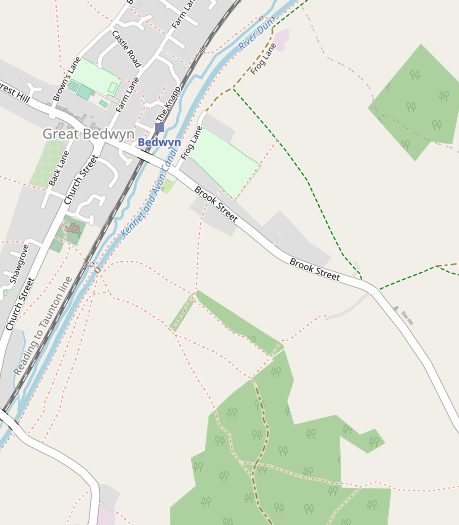
We moored our hire boat, Moonfleet, by a small bridge to the south of the centre of the village, which is conveniently at the point where a number of footpaths intersect.
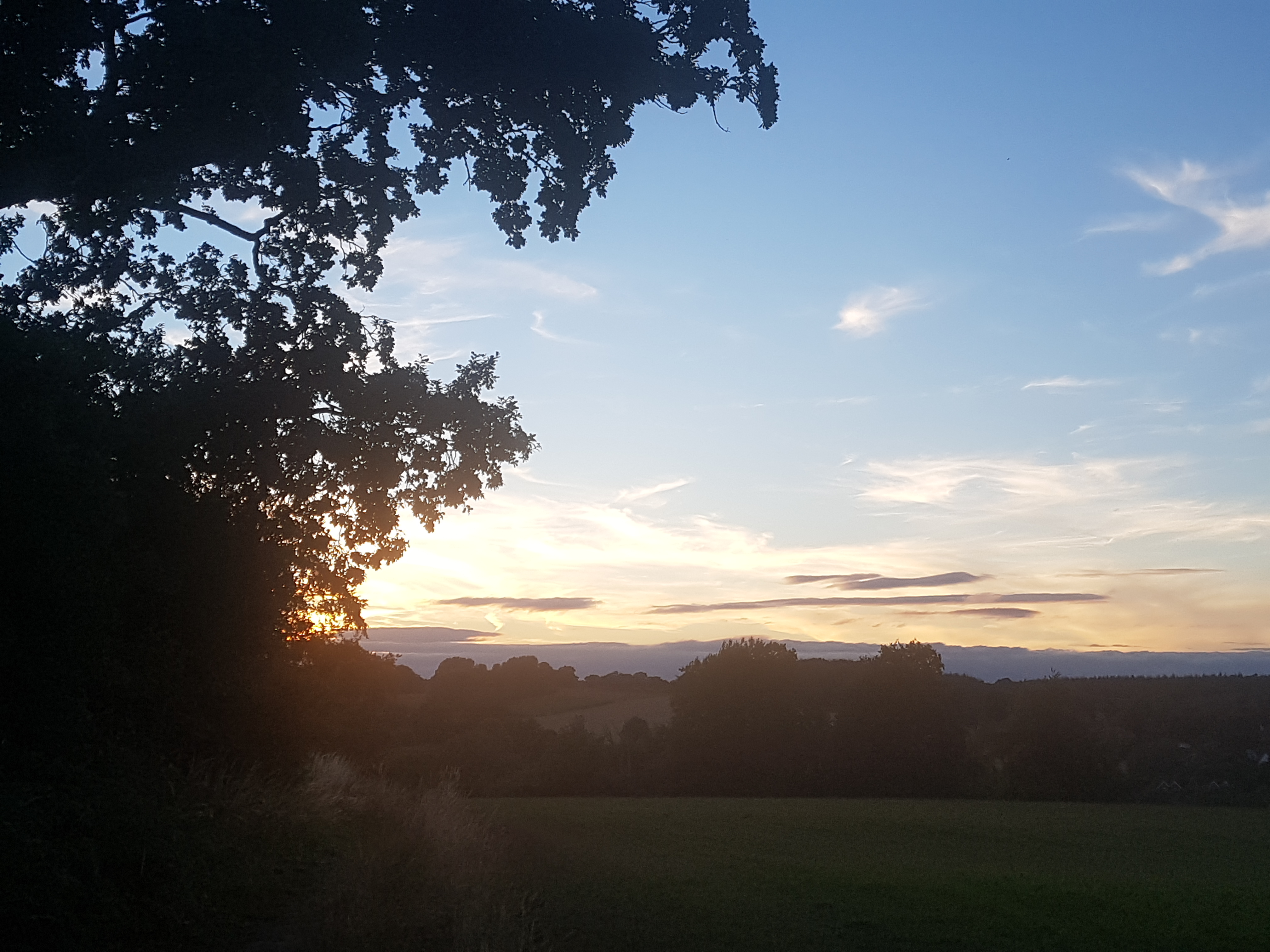
Walking south east from our mooring one evening, we climbed a low hill which provided worthwhile views in many directions. At the top of the hill was a level field where we encountered hares, a deer and a very vocal tawny owl. Continuing a short distance, we arrived in some established mixed woodland – Ivy’s Copse. At this point I turned on the bat detector to see what we could find. As well as the usual pipistrelles, we discovered two bats of particular interest, one of them rare.
Barbastelles
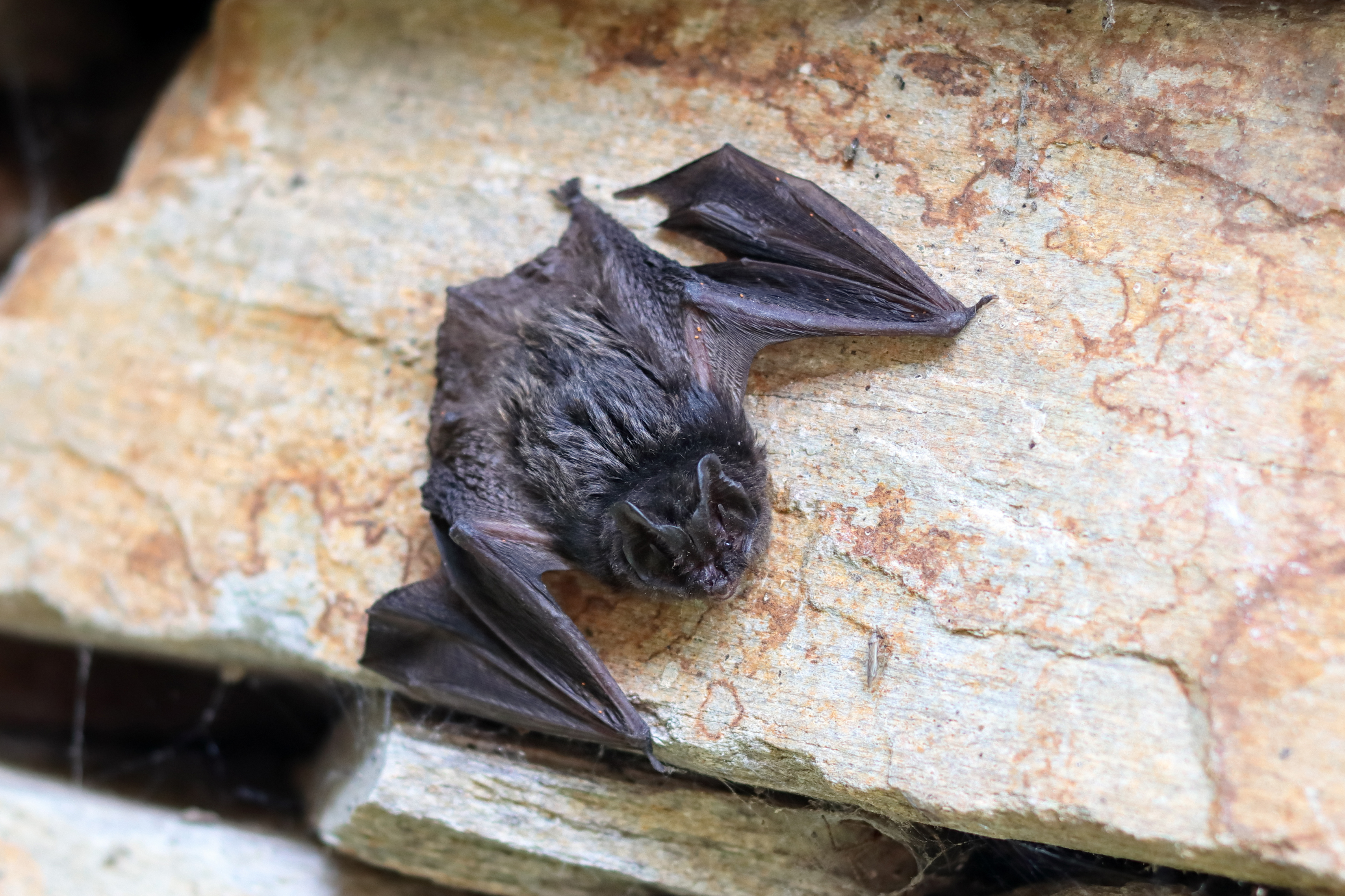
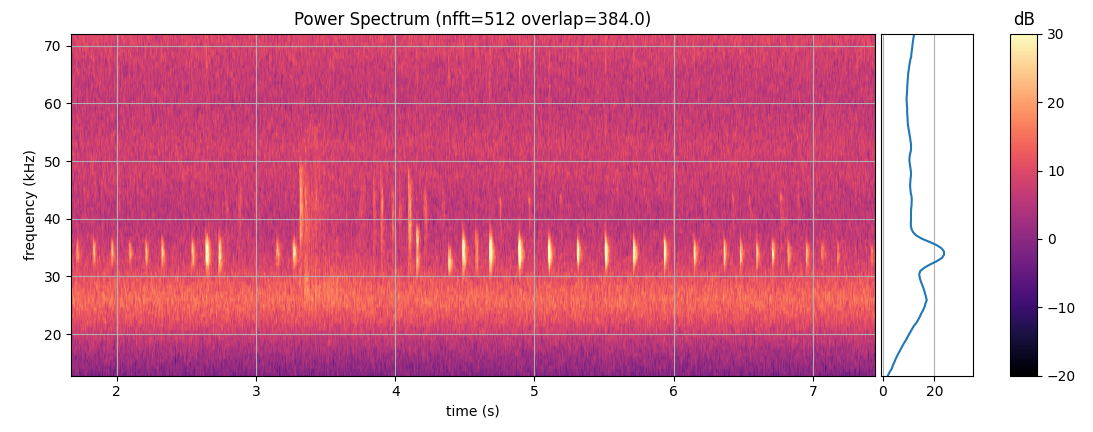
The Woodland Trust describes barbastelle bats as distinctive, rare and elusive. Barbastelle bats like to hunt and sleep in deciduous woodland. Barbastelle translates to “star beard”. They have a distinctive appearance resulting from having dark fur with white tips, and pug like nose. Their echolocation call consists of a louder chirp centred around the mid 30kHz range, alternating with a quieter chirp that drops from around 44 kHz. The quieter chirps are faintly visible towards the right of the sonogram above.
Barbastelle bats have a useful trick to help them catch moths. Some moths can hear bat echolocation calls, and take evasive action. Barbastelle echolocation is quieter than many other bats to help avoid alerting its target, but it gets even quieter as it closes on the moth. Notice how the feeding buzz in the sonogram above fades away to very little, almost invisible against the microphone noise.
We felt privileged to encounter not just one, but two barbastelles on our short walk.
Serotine
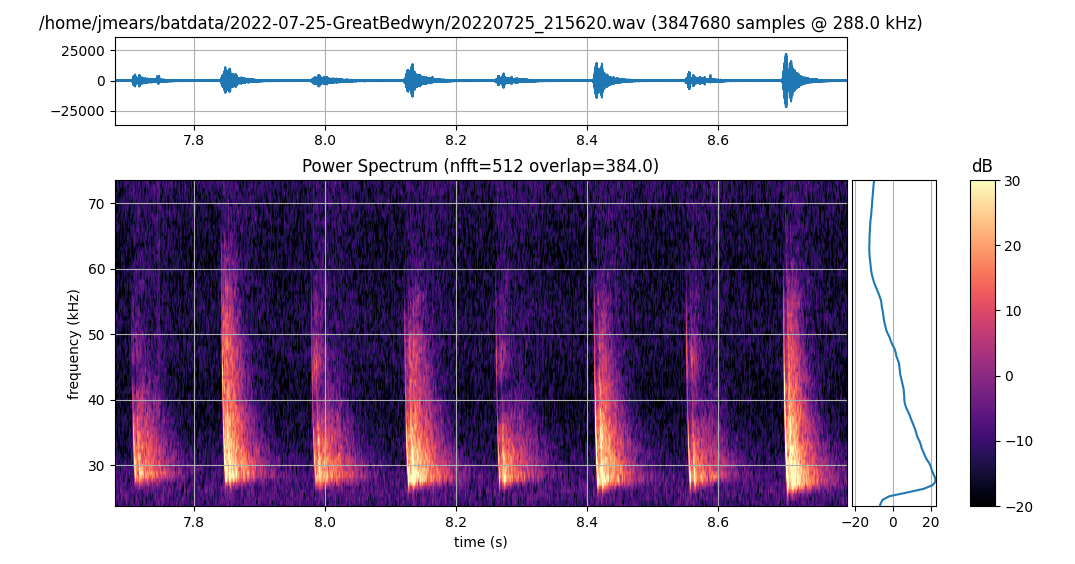
Serotines are large, relative to bats typically found in the UK. We were able to see this bat and note its size. Serotines like woodland edges and canals, but also feed within deciduous woodland, as is the case for this one. Its call is loud and unmistakable.
 Twilight Travels